
Market access & input costs
Start with the actual restriction and identify the products, customers and countries within its scope. Then map the company’s direct and indirect exposure.
Which revenues or inputs fall within the rule?

Our thematic interests sit within a broader programme of fundamental research, financial scrutiny, valuation and risk assessment.
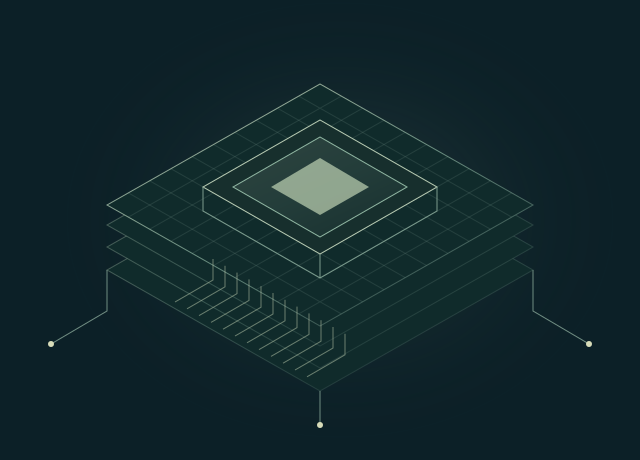
Select a research theme, then choose a connection in the diagram to see how it reaches the economics of a business.
Start with the actual restriction and identify the products, customers and countries within its scope. Then map the company’s direct and indirect exposure.
Which revenues or inputs fall within the rule?
Trace how a disruption reaches the business: through an input price, physical availability, transport route or customer demand.
Is supply contracted, hedged or exposed to spot markets?
Examine the incentives that influence where companies build capacity and which activities governments choose to support.
Is the benefit recurring or a temporary incentive?
Distinguish a temporary interruption from a structural limit on supply. The time and capital required to add capacity are central questions.
What is preventing more supply from reaching the market?
Break demand into its uses and customers. Assess whether a change reflects activity, stock-building, a new application or substitution.
Which end markets explain the change?
Study what the company does with cash in favourable conditions and what obligations remain when those conditions fade.
How much spending maintains current production?
Follow the chain from design and fabrication to equipment, packaging, memory and networking. Look for dependencies between the layers.
Which capability is difficult for a competitor to reproduce?
Examine the systems required to run a facility, alongside the location-specific constraints on connecting and operating it.
Is a power connection secured or only planned?
Separate announced capacity from delivered capacity and delivered capacity from economically productive use.
What has been contracted, commissioned and occupied?
A view of our analytical approach. Selectable connections explain research questions and do not represent market data.
We examine how policy, trade and strategic competition shape the environment in which companies operate.
Power. Policy. Realignment.02 / RESEARCH FOCUSWe connect physical resources, supply discipline and end-market demand with the economics of the companies behind them.
The physical foundations.03 / RESEARCH FOCUSWe study the semiconductors, facilities and energy systems that make the development and use of AI possible.
Beyond the application layer.Business models, management, competitive position and relationships across customers, suppliers and competitors.
02Earnings quality, cash conversion, balance-sheet obligations and the assumptions within reported performance.
03Cash flows, market comparisons, assets, business segments and the expectations embedded in the price.
04Growth, inflation, rates, currencies, policy and the channels through which they affect businesses.
05Scenarios, sensitivities and the strongest opposing case, brought into the same assessment.
06Changes in the evidence, thesis signposts and lessons that improve the next piece of research.
A headline becomes useful research only when the transmission mechanism is clear.
Price is the visible signal. Supply, inventories and capital commitments help explain the system behind it.
Follow the links between compute, facilities, power and the capital needed to bring them together.